

Therapeutic music in the Recovery Area







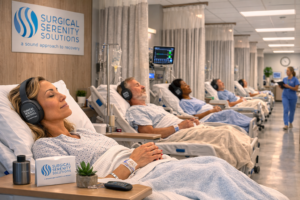 One of my first experiences with music and surgery was with a patient who was having heart bypass surgery. The doctors did not not know until they opened her up, how many by-passes she would need. She needed FIVE! This was before I had curated my five playlists for surgery, but I definitely realized that she needed a tempo that would allow for immediate rhythmic entrainment.
The patient had been somewhat reluctant to use music through headphones before the procedure. She said that she was afraid they would be uncomfortable or that she wouldn’t hear something she needed to hear. She was assured that once in surgery, she would be put to sleep and that there would be nothing she needed to hear. If anything, there could be conversations and sounds that she definitely DIDN’T need hear…like when the surgeon might say “this is worse than we thought,” or “she is going to have a lot of pain.” Yes, OR staff do make these kinds of comments, thinking that the patient can’t hear them, but at a subconscious level, the patient can hear these comments and feels lots of anxiety afterwards, even thought they many not know why.
Benefits of music in the recovery area
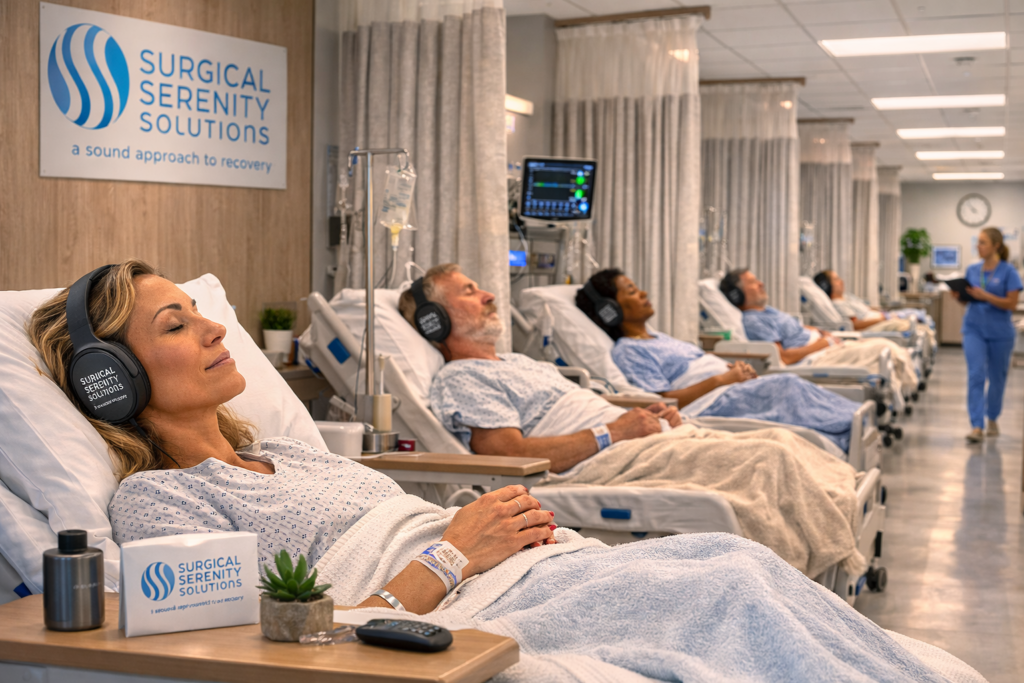
 When the patient has had the Surgical Serenity Solutions headphones on throughout the surgery, they awaken gradually to the same music they fell asleep to and the music orients them to time and place, letting them know their surgery is over and they are now in recovery. This is very comforting and reassuring. Often there is much less or even no, nausea and vomiting, another huge plus.
The patient who had the heart by-passes said that while she was in the recovery area, there were patients so close to her, just on the other side of a curtain. She reported that many of the patients were moaning in pain, or crying out for the nurses. She was coherent enough to know that because she was wearing headphones with soothing music playing, she was protected from the disconcerting sounds of patients in distress nearby. That alone is worth wearing them!
Will your hospitals have preloaded headphones waiting for you?
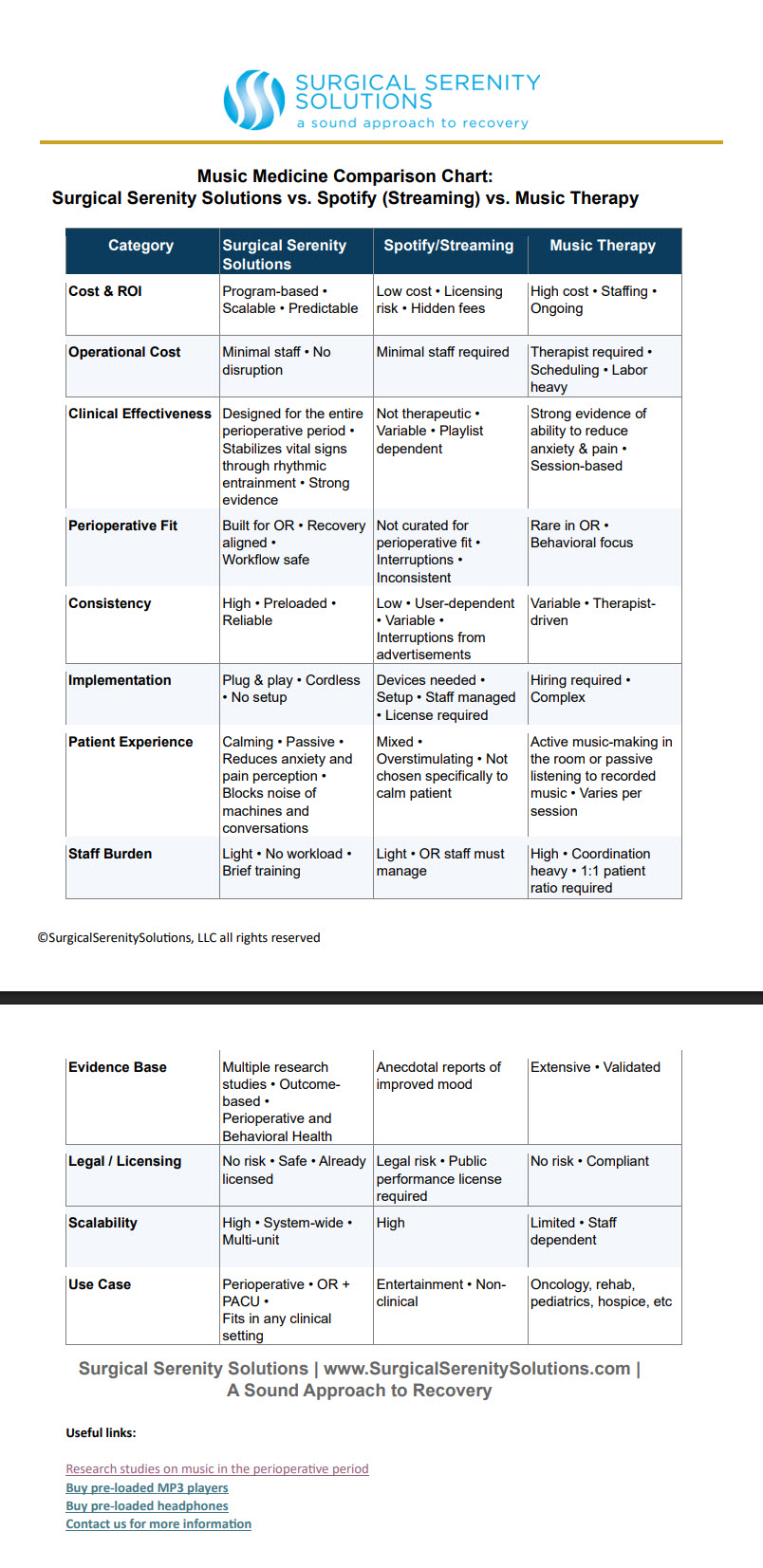
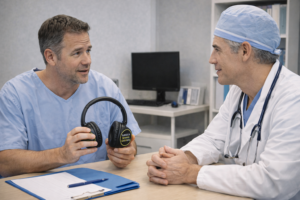 I’d say it is doubtful that your hospital will have these or any other preloaded headphones waiting for you. The trend today in most ORs is to play music through Spotify or another streaming app on someone’s phone or on an iPad nearby.
Is this as good? If course not, but it is FREE. If you want to have music in any part of your surgery, you will need to tell the doctor that you want therapeutic music before, during, and after your procedure and if the hospital doesn’t provide these headphones (they are not expensive) you can get your own headphones a few weeks in advance, or you can download one of our playlists and stream it to yourself through earbuds or Bluetooth headphones
To buy individual headphones, go HERE
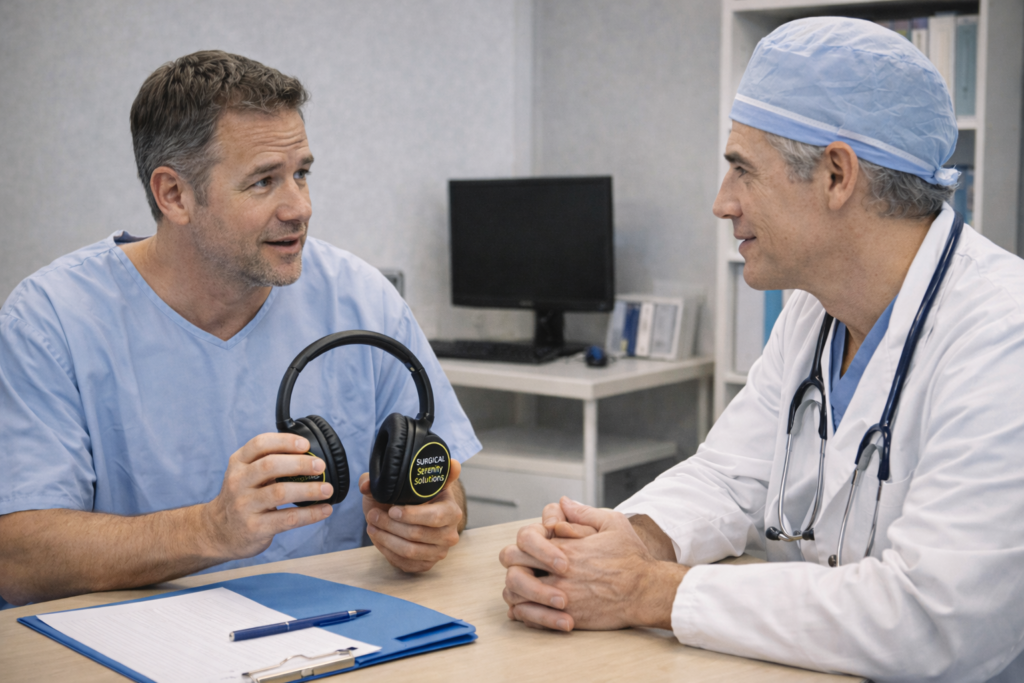
For the hospital to purchase our Hospital Starter Kit, go HERE
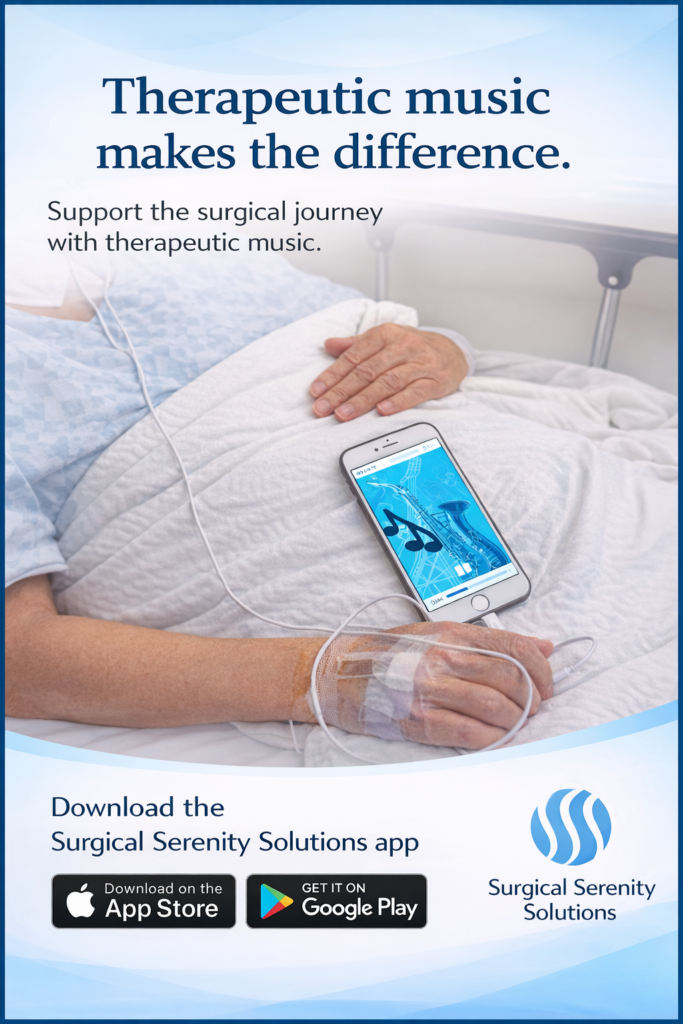
To download our free app, then purchase one of five playlists, go HERE
Please let me know your thoughts and comments! Wishing you a positive and successful experience.


 Having surgery is a frightening and stressful situation. Even before that, NEEDING surgery is a frightening and stressful situation.
 A significant percentage of patients had their perioperative anxiety level reduced (as measured by the Visual Analog Scale for Anxiety) with an effectiveness similar to benzodiazepines.
 Are YOU ready to step into the future with

 #1 customer. Music therapy has always been important at VA hospitals and that is actually where the modern day music therapy profession first took root, right after WWII when soldiers cam back with serious injuries and mental health issues that left them depressed and with PTSD (although that term was not yet used right after WWII.)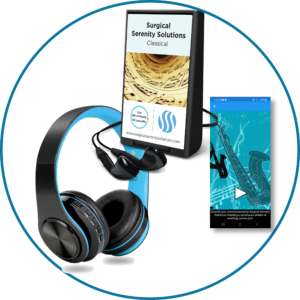


 Have you been to the dentist lately? A new friend of mine went last week and was telling me on a Tuesday how much she was dreading it on Thursday. Of course I could hardly wait to tell her about the Surgical Serenity Solutions playlists that so many people like to use during their dental procedures.
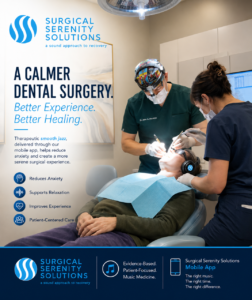 Then I began to think about creating a downloadable app for my playlists. One that anyone could download onto their phone before a patient had dental work or a colonoscopy or a knee replacement …whatever!

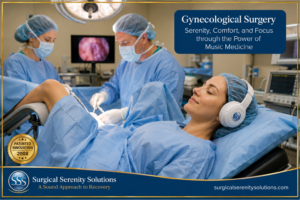 Recently I became aware of QID 477 multimodal pain management (also known as MS-DRG 744). It



 Music with surgery and in the perioperative period has been around for a while now. Binaural beats have also been around for a long time. NOW, we have added binaural beats to one of our existing playlists.
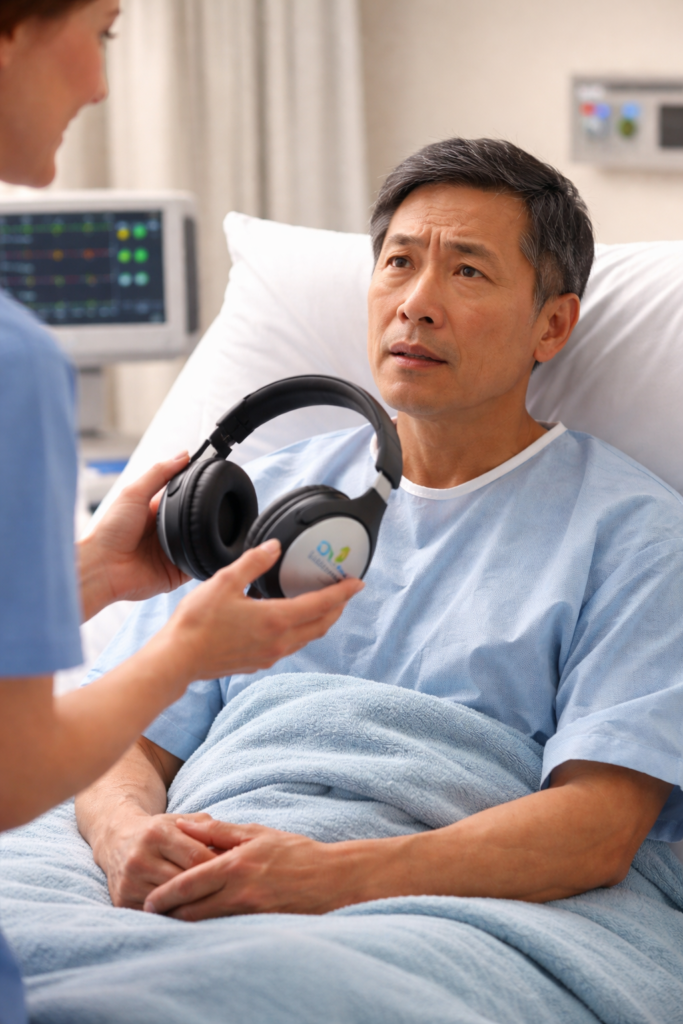
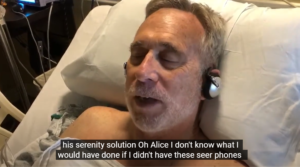 As alway, the headphones are placed on the patient’s head during the preoperative period, after the patient has changed into the surgical gown and had the IV placed. I have seen this happen many, many times and as soon as headphones go on, the patient closes their eyes and exhales a huge sigh of relief, as the soothing therapeutic music begins to wash over them.






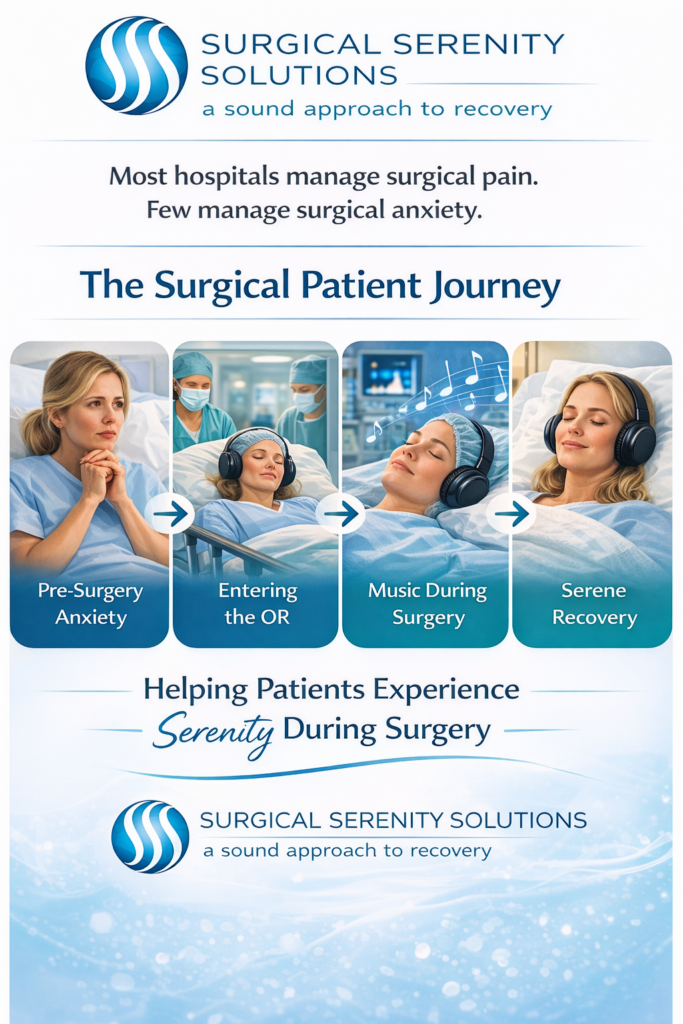 When Surgical Serenity Solutions started a few decades ago, the idea was to provide soothing music to the patient who is very anxious. But around that same time, surgeons were beginning to choose music for themselves to play during surgery. There was a widespread myth that patients under anesthesia would NOT hear the surgeon’s music and therefore surgeon’s could choose whatever they wanted, including such “gems” as “Another One Bites the Dust” by Queen.